Last week I had some minor surgery. It was a painless, outpatient procedure that forced me to spend a few days being waited on at home by my wife, Donna, while I watched old movies on television. But it brought to mind a very different experience from some thirty years ago.
I was riding my motorcycle home from work, that time, and anxious to see the final game of the World Series. The Yankees were playing somebody, and I am a Yankees fan. But it seems that the previous owner of my BMW had put the wrong tires on it and, at 65 mph it went into a “high speed wobble” that culminated in me flying over the handlebars onto the concrete pavement of the Merritt Parkway.
When I came to, there were people telling me not to move and assuring me that I would be all right. Both an ambulance and a pickup truck were on their way, the pickup being to bring my motorcycle to the repair shop. It wasn’t till the EMS crew started to lift me onto the stretcher that I had any sense of my injuries, and that was excruciating pain in my chest and collarbone. As long as I lay still, I was all right, but the moment I tried to move or someone else tried to move me, no matter how carefully, the pain was terrible. As the ambulance backed up to the business end of Norwalk Hospital, I wondered whether I might be dying. If so, I remember hoping to live long enough to hear the outcome of the Yankees’ game.
In E.R., when I was helped to stand in front of the x-ray machine, I passed out. From then on, as I lay in bed in the Intensive Care Unit, it was a matter of coming to for short stays, then, for no apparent reason, passing out again. On the other side of the white curtain on my right, an old man was fighting for breath, groaning and gasping, possibly for the last moments of his life, and reminding me that, if I survived this, I still had that to look forward to, down the line. And, when I asked about the World Series score, no one seemed to know. I began to suspect that the Yankees had lost and they were withholding the news from me so that I might die in peace.
In addition, I was in a difficult place at the time. Earlier that year, my wife of 23 years and I had separated, much against my will, and I was trying to build a life without her. When the hospital people had asked me whom they should notify, I had named the lady that I had recently formed a relationship with, but said that they certainly should not call my estranged wife. But the hospital had played it safe and summoned my wife anyway, I suppose in the event that her signature was necessary for something. She had brought my thirteen year-old-daughter, as well, a decision I didn’t consider wise under the circumstances. And now, as I came in and out of lala land I would find my lady friend holding my hand on one occasion, my daughter on another occasion, my wife on a third occasion, and, sometimes, just a solicitous, six-foot tall, white rabbit, wearing scrubs.
It was determined that I had broken my collarbone in two places along with a liberal quantity of ribs, as well as rupturing my spleen. The ruptured spleen, I was told, was hemorrhaging into my body cavity and causing the loss of consciousness. And, if it wasn’t repaired within the next two hours, I would bleed to death.
At that point, with jolts of pain each time someone tried to move me, bleeding to death didn’t seem like the worst of my options. But someone signed the release, and I was told that that I would soon be going upstairs to Surgery. Being moved from my I.C.U. bed onto a gurney for the trip upstairs seemed like a “via dolorosa” that I would just as soon pass up.
Then a miracle happened. A woman in the colorful scrubs of the O.R. appeared at my bedside, introduced herself as my – my very own – O.R. nurse, who, she promised, would be with me through the entire procedure. Then she went on to inform the orderlies that I was going upstairs in my own I.C.U. bed, rather than the rinky-dink contraption they were anxious to transfer me on to. Taking her outstretched hand, I felt as though I was holding hands with an angel, and we proceeded to ascend into the higher regions of Norwalk Hospital.
I’ve never seen that nurse again, nor would I recognize her if I did. But I do remember the feel of her hand in mine and the wonderfully comforting sense that a caring person had just committed herself to being “with me” through the entire ordeal.
Last week, as Donna, and I sat in the waiting room for what was to be much less of an “ordeal” and under far less stressful circumstances, instead of the usual technical person struggling with the pronunciation of my name from across the room, an O.R. nurse in the colorful scrubs of that profession came to where we were sitting, introduced herself, and explained that she would be “my” nurse for the procedure. She didn’t offer her hand this time, so I don’t know if it would have felt the same. But that wonderful sense of a total stranger appearing out of the blue to care, was there again.
By the way, the Yankees won that Series as well.
Sunday, February 21, 2010


Saturday, February 6, 2010
Recently, I told you about my undistinguished, fictional friend Kip, rattling around in the back of my head, and the book, “Writer’s Block,” that I had to write in order to get rid of the rattling. What I didn’t tell you was that the rattling didn’t stop with the end of the book. It seems that I got so deeply involved with Kip and his friends that I found myself suffering withdrawal symptoms and immediately set about writing a sequel. After finishing the sequel and some wondering what to do next, I still had so much unfinished business with Kip that I decided to do a trequel.
In writing the original sequel, I began with Kip and Amanda in Europe, where I had left them, and proceeded to bring them back to the little Village of Venice, Mass., where Kip is now a local hero because of what he did in the original book, plus the book he has written while in Europe. This immediately set up a broad range of possibilities and I began writing the opening chapter without bothering to do an outline, but with the confidence that, with all the possibilities, something would develop.
And it did. But, as I approached the trequel, I did not see the natural plot possibilities ahead of me, and decided to do an outline so that I would know where I was heading. And that outline required a dramatic ending in which Kip confronts the abusive father of a troubled fourteen-year-old boy, whom he is mentoring, that convinces the boy that he cares about him.
This gave me a very confined stage to work on. Being seventy years old, Kip is not about to get into a fist fight with the man, and I just could not come up with a way of resolving the conflict between the two men that would be in keeping with the tone of the story. Usually, my run/walks produce solutions to such problems, but no ideas that this technique developed seemed to fit the situation.
Then I asked the advice of a friend of mine, who is a therapist. “Is there some exercise for extending your creativity?” I asked him. “Something to help you to think ‘outside the box’?” My wife has a wonderful capacity for thinking outside the box, which I very much envy.
“What you do,” my friend suggested, “is tonight, before going to sleep, you ask your unconscious to help you.” My friend is a disciple of Milton Eriksen, the famous hypnosis therapy guru, and I should have known that he would suggest this approach to the problem.
“You tell your unconscious how grateful you are for all the ways it has helped and protected you throughout your life,” he continued, “because the unconscious is very susceptible to flattery, you know, and then ask it to help you to find a solution to your problem.” He also explained that the unconscious is generally quite inclined to help you in life since it knows that, “if you’re out of business, it is out of business.” Then he added, “You may wake up with a solution.”
That night, I tried my friend’s technique. I was, of course, skeptical, but I had nothing to lose and a lot to gain. As my wife turned out the light, after watching one of the BBC comedies that we enjoy so much, I turned my attention to my unconscious and, following my friend’s instructions, said something like, “I want to thank you for all the ways that you’ve helped me and protected me in the past.” As you can imagine, it wasn’t easy saying that, even silently and in the dark, but I continued. “But now I need your help in a small writing problem. As you probably know, I’ve got to come up with some kind of dramatic conflict between Kip and Erik’s father that will convince the troubled Erik that Kip cares about him. I’ve been looking for a solution for a couple of weeks now, and I need to start thinking more outside the box.” Then I went to sleep.
The next morning I woke up with a headache. The temptation was to take that as a “Do not disturb.” I could visualize my unconscious playing Chinese checkers with my libido. I was tempted to say, “I knew it wouldn’t work,” but didn’t dare to, just in case someone was listening.
Later in the morning I went for my run and, about a mile and a half into the run it occurred to me to introduce a third element into the confrontation, along with Kip and Erik’s father – a hurricane.
In a more serious drama, introducing a hurricane at this particular point would be considered gimmicky. But this is a humorous story and, in that context, I felt it would be acceptable. So I wrote in a hurricane and Kip’s concern for his new sailboat which needs to be secured against the wind, but he is not willing to leave Erik alone with the abusive father, and I had a dramatic climax.
In the week or so since then, I have found myself coming up with solutions to other problems that I consider to be from “outside the box.” As you can imagine, for a writer of fiction, this is, indeed, a valuable ability. In the past I have considered myself a good “storyteller,” that is someone who can do a good job dressing up a story, once there is a story to dress up. But I have considered myself weak in the area of actually creating a story. Now, hopefully, with the help of my new internal friend, this will all improve. You might give it a try.
In writing the original sequel, I began with Kip and Amanda in Europe, where I had left them, and proceeded to bring them back to the little Village of Venice, Mass., where Kip is now a local hero because of what he did in the original book, plus the book he has written while in Europe. This immediately set up a broad range of possibilities and I began writing the opening chapter without bothering to do an outline, but with the confidence that, with all the possibilities, something would develop.
And it did. But, as I approached the trequel, I did not see the natural plot possibilities ahead of me, and decided to do an outline so that I would know where I was heading. And that outline required a dramatic ending in which Kip confronts the abusive father of a troubled fourteen-year-old boy, whom he is mentoring, that convinces the boy that he cares about him.
This gave me a very confined stage to work on. Being seventy years old, Kip is not about to get into a fist fight with the man, and I just could not come up with a way of resolving the conflict between the two men that would be in keeping with the tone of the story. Usually, my run/walks produce solutions to such problems, but no ideas that this technique developed seemed to fit the situation.
Then I asked the advice of a friend of mine, who is a therapist. “Is there some exercise for extending your creativity?” I asked him. “Something to help you to think ‘outside the box’?” My wife has a wonderful capacity for thinking outside the box, which I very much envy.
“What you do,” my friend suggested, “is tonight, before going to sleep, you ask your unconscious to help you.” My friend is a disciple of Milton Eriksen, the famous hypnosis therapy guru, and I should have known that he would suggest this approach to the problem.
“You tell your unconscious how grateful you are for all the ways it has helped and protected you throughout your life,” he continued, “because the unconscious is very susceptible to flattery, you know, and then ask it to help you to find a solution to your problem.” He also explained that the unconscious is generally quite inclined to help you in life since it knows that, “if you’re out of business, it is out of business.” Then he added, “You may wake up with a solution.”
That night, I tried my friend’s technique. I was, of course, skeptical, but I had nothing to lose and a lot to gain. As my wife turned out the light, after watching one of the BBC comedies that we enjoy so much, I turned my attention to my unconscious and, following my friend’s instructions, said something like, “I want to thank you for all the ways that you’ve helped me and protected me in the past.” As you can imagine, it wasn’t easy saying that, even silently and in the dark, but I continued. “But now I need your help in a small writing problem. As you probably know, I’ve got to come up with some kind of dramatic conflict between Kip and Erik’s father that will convince the troubled Erik that Kip cares about him. I’ve been looking for a solution for a couple of weeks now, and I need to start thinking more outside the box.” Then I went to sleep.
The next morning I woke up with a headache. The temptation was to take that as a “Do not disturb.” I could visualize my unconscious playing Chinese checkers with my libido. I was tempted to say, “I knew it wouldn’t work,” but didn’t dare to, just in case someone was listening.
Later in the morning I went for my run and, about a mile and a half into the run it occurred to me to introduce a third element into the confrontation, along with Kip and Erik’s father – a hurricane.
In a more serious drama, introducing a hurricane at this particular point would be considered gimmicky. But this is a humorous story and, in that context, I felt it would be acceptable. So I wrote in a hurricane and Kip’s concern for his new sailboat which needs to be secured against the wind, but he is not willing to leave Erik alone with the abusive father, and I had a dramatic climax.
In the week or so since then, I have found myself coming up with solutions to other problems that I consider to be from “outside the box.” As you can imagine, for a writer of fiction, this is, indeed, a valuable ability. In the past I have considered myself a good “storyteller,” that is someone who can do a good job dressing up a story, once there is a story to dress up. But I have considered myself weak in the area of actually creating a story. Now, hopefully, with the help of my new internal friend, this will all improve. You might give it a try.
Tuesday, January 26, 2010
It seems that I’m making history.
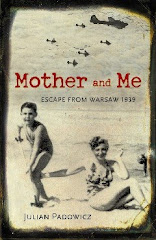
The other day a relative e-mailed me some information she had dug up in “Google” about my family. Among other things, the article said that my mother had two sisters-in-law, named Edna and Paula. Edna and Paula are the names that I assigned to my two aunts, in my book, “Mother and Me.” Their names weren’t Edna and Paula. As I explained in the “Author’s Note” at the beginning of the book, I assigned fictitious names to some of the characters, since I could not rely on my sixty-plus-year-old memory to treat them fairly and didn’t want to embarrass anyone. Apparently the author of the article did not bother to read that disclaimer, and my two aunts will go down in history under assumed names.
Then there is the matter of my father. Those of you who read “Mother and Me” may recall an incident along the road from Warsaw where we encounter a Polish military convoy with a broken-down truck and a young lieutenant who wants to commandeer ours. To stop him from doing that, my mother tells him a big fib about the truck belonging to my father and about my father being a senator. I believe that I made it quite clear in the book that this is one of the fibs that my mother would use to solve problems and which drove me crazy. But, apparently, the fib fooled not only the young lieutenant, but the author of the “Google” article as well. My father, who had been a businessman in the textile business, is now duly ensconced in the annals of Polish history as a senator.
I can’t help wondering how accurate the rest of the supposedly authoritative articles on the Internet really are.
The other day a relative e-mailed me some information she had dug up in “Google” about my family. Among other things, the article said that my mother had two sisters-in-law, named Edna and Paula. Edna and Paula are the names that I assigned to my two aunts, in my book, “Mother and Me.” Their names weren’t Edna and Paula. As I explained in the “Author’s Note” at the beginning of the book, I assigned fictitious names to some of the characters, since I could not rely on my sixty-plus-year-old memory to treat them fairly and didn’t want to embarrass anyone. Apparently the author of the article did not bother to read that disclaimer, and my two aunts will go down in history under assumed names.
Then there is the matter of my father. Those of you who read “Mother and Me” may recall an incident along the road from Warsaw where we encounter a Polish military convoy with a broken-down truck and a young lieutenant who wants to commandeer ours. To stop him from doing that, my mother tells him a big fib about the truck belonging to my father and about my father being a senator. I believe that I made it quite clear in the book that this is one of the fibs that my mother would use to solve problems and which drove me crazy. But, apparently, the fib fooled not only the young lieutenant, but the author of the “Google” article as well. My father, who had been a businessman in the textile business, is now duly ensconced in the annals of Polish history as a senator.
I can’t help wondering how accurate the rest of the supposedly authoritative articles on the Internet really are.
Monday, January 11, 2010
‘T was a dark and stormy (not really) Thursday or Friday afternoon, some twenty-five years ago, when my late wife, Phyllis and I set out from Greenwich, Conn. for the Berkshire Mountains. A senior early-childhood educator, Phyllis was friend and mentor to a young elementary school teacher named Arlene, teaching in a well-heeled town on Long Island. Somewhere along the line, Phyllis had advised apartment dwelling Arlene to invest in some real property, and it was Arlene and her husband’s new summer house in Austerlitz, NY that we were on our way to visit.
Arlene and Jerry’s house turned out to be a comfortable, three-bedroom ranch, built on a slope, with a garage underneath, nestled in the woods, off a dirt road, and, the following morning, I dutifully took to that dirt road for my daily run. It was a dark and cloudy morning (for real this time), and, as I passed a particular stretch of woods, I could glimpse a body of water, gloomy and forbidding, beyond the woods and clicking my imagination immediately into high gear.
What my imagination concocted was a vicious murder that a passer-by might witness through the trees, in which a man was beating another man to death with his bare hands. The man witnessing it has the option of intervening or calling for help or ignoring the whole thing, but the one that he chooses to follow – and this was the creative part – is a fourth and quite unusual option. I’m not telling what this option is, because I may want to re-visit it one day, but it could have lead to a rather original thriller.
Of course it would take a certain kind of man in a certain set of circumstances to choose this particular option, and over the next days, while visiting with our friends and later, I set my mind to creating such a man and such a set of circumstances. I named him Kip and made him an undistinguished literature professor at an undistinguished college in the Midwest, dealing with some unique identity problems.
But Kip wouldn’t stop growing on me, and the more real that he became, the more interested I became in him, to the extent that pretty soon I considered him far too interesting to be subjected to the requirements of a “thriller” plot. But other matters called. Not having yet retired to my present full-time-author state, I had a business to run and a living to make, and no time to give to Kip’s problems. Then I got involved in writing my “Mother and Me” memoir series, finding a publisher, and promoting the books. Kip kept rattling around in the back of my mind, but never settling down to some constructive thinking. It wasn’t till a couple of years ago that I had the time to return to my undistinguished friend and build him a novel worthy of his personality.
I took Arlene and Jerry’s Austerlitz house, moved it to a coastal village in Massachusetts, and placed it near a woods, with a river flowing to the ocean beyond. Kip inherits it from a colleague, almost as a challenge to sit down and write a book. I gave him a beautiful postmistress named Amanda, whom he lusts after, and a beautiful married woman named Lill who – well, you’ll need to read the book to find out. There is also a large sailboat, named The Black Dog, being built for a cantankerous local, named Tillman. Recognized to be the best sailor in these parts, Tillman has designed the boat himself and intends to sail her, as soon as she’s ready, down to Florida, where he plans to go into the chartering business. There is speculation among the villagers as to the Black Dog’s seaworthiness. The boat isn’t ready till the November chills and storms, and Tillman has invited newcomer Kip to sail to Florida with him, since no one in town will sail with him, even in good weather. No sailor, Kip, nevertheless, believes himself to be in a situation where honor compels him to accept. Then there is the matter of a married lady’s hot tub and…..
Anyway, the book is entitled “Writer’s Block” and it is due to be released by Fireship Press later this winter.
Phyllis passed away in 1986, but Arlene and Jerry were among the first people I introduced my present wife, Donna, to and the friendship continues. How that’ll fare after they find their house so shamefully abused, remains to be seen.
Arlene and Jerry’s house turned out to be a comfortable, three-bedroom ranch, built on a slope, with a garage underneath, nestled in the woods, off a dirt road, and, the following morning, I dutifully took to that dirt road for my daily run. It was a dark and cloudy morning (for real this time), and, as I passed a particular stretch of woods, I could glimpse a body of water, gloomy and forbidding, beyond the woods and clicking my imagination immediately into high gear.
What my imagination concocted was a vicious murder that a passer-by might witness through the trees, in which a man was beating another man to death with his bare hands. The man witnessing it has the option of intervening or calling for help or ignoring the whole thing, but the one that he chooses to follow – and this was the creative part – is a fourth and quite unusual option. I’m not telling what this option is, because I may want to re-visit it one day, but it could have lead to a rather original thriller.
Of course it would take a certain kind of man in a certain set of circumstances to choose this particular option, and over the next days, while visiting with our friends and later, I set my mind to creating such a man and such a set of circumstances. I named him Kip and made him an undistinguished literature professor at an undistinguished college in the Midwest, dealing with some unique identity problems.
But Kip wouldn’t stop growing on me, and the more real that he became, the more interested I became in him, to the extent that pretty soon I considered him far too interesting to be subjected to the requirements of a “thriller” plot. But other matters called. Not having yet retired to my present full-time-author state, I had a business to run and a living to make, and no time to give to Kip’s problems. Then I got involved in writing my “Mother and Me” memoir series, finding a publisher, and promoting the books. Kip kept rattling around in the back of my mind, but never settling down to some constructive thinking. It wasn’t till a couple of years ago that I had the time to return to my undistinguished friend and build him a novel worthy of his personality.
I took Arlene and Jerry’s Austerlitz house, moved it to a coastal village in Massachusetts, and placed it near a woods, with a river flowing to the ocean beyond. Kip inherits it from a colleague, almost as a challenge to sit down and write a book. I gave him a beautiful postmistress named Amanda, whom he lusts after, and a beautiful married woman named Lill who – well, you’ll need to read the book to find out. There is also a large sailboat, named The Black Dog, being built for a cantankerous local, named Tillman. Recognized to be the best sailor in these parts, Tillman has designed the boat himself and intends to sail her, as soon as she’s ready, down to Florida, where he plans to go into the chartering business. There is speculation among the villagers as to the Black Dog’s seaworthiness. The boat isn’t ready till the November chills and storms, and Tillman has invited newcomer Kip to sail to Florida with him, since no one in town will sail with him, even in good weather. No sailor, Kip, nevertheless, believes himself to be in a situation where honor compels him to accept. Then there is the matter of a married lady’s hot tub and…..
Anyway, the book is entitled “Writer’s Block” and it is due to be released by Fireship Press later this winter.
Phyllis passed away in 1986, but Arlene and Jerry were among the first people I introduced my present wife, Donna, to and the friendship continues. How that’ll fare after they find their house so shamefully abused, remains to be seen.
Wednesday, December 30, 2009
It’s been two months since my last posting. For about five weeks I was fighting a cold and couldn’t run, thus cutting off the prime source of blog material. Then my film deal fell through turning my thoughts from stalking readers for my books to formulating new writing plans. I strongly considered abandoning this blog. I didn’t know if anyone was even reading it. But then I discovered a reader identifying himself as “Jockomo” and expressing a concern for both my health and further postings. I couldn’t help but respond to Jockomo.
Yes, I am healthy and trying to get back into shape. I can run two miles and am working up to three. Strangely enough, I have had little contact with people during my runs, perhaps due to winter weather, and thus little inspiration for the blog. But, I will tell you about what has occupied my thoughts for the last few weeks.
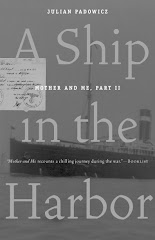
The sequel to “Mother and Me” was released by my publisher this past November, under the title, “A Ship in the Harbor.” There is a second sequel (trequel?) named “Loves of Yulian,” at the publisher now, hopefully for release next year. This second sequel ends as my mother and I sail into New York harbor in May of 1941 and Mother drags me on deck at some ungodly hour of the morning to see the Stature of Liberty. I am nine years old and would much rather go back to bed. Since this ends our odyssey of escape from the invading Nazis, I considered it a proper ending for the memoir series.
But readers have become so interested in the character of Barbara, my mother, that they have been asking for a fourth book, telling them what happened once this firecracker got to the States. And I, like any author, have fallen in love with my leading characters. If Barbara wouldn’t allow herself to be loved as a mother, she could not stop me from loving her as a character and wanting to give her a final curtain call worthy of her earlier heroics.
Unfortunately, that is not the way it happened. Some of the traits that made Barbara an exciting character in the drama of WW II, revealed themselves as tragic character flaws later in life, making for an ending that was not in keeping with the endings of the other three books. I know that life is messy and everyone has dirty laundry, but I’ve discovered that I am not a tragedian, and my mother’s tragedy is not how I want to end my memoir.
Still, there is so much more to the story, and, as a storyteller, I cannot resist. Were this a work of fiction, I could easily shape the ending to my taste, but it’s not – it’s a memoir. And I have spent several weeks pondering this problem. How do I put an ending acceptable to me, on an uncooperative memoir?
Finally, I wrote a prologue that lays my problem out for the reader. Book IV, I explain, will be a memoir, most of the way, with a just a few changes. Those who really, really want to know what really, really happened, will not be satisfied. But those who, like me, have come to love Barbara as a character of literature will, hopefully find satisfaction and fulfillment in her last hurrah.
And so, there it is. I don’t have a title for it yet, and I don’t know if my publisher will want to publish it. I don’t even know if I will ever finish it. But that’s where I’m at now.
I hope to be back in a week or so with more material. Any of you who may want to contact me directly can reach me at julianpadowicz@julianpadowicz.com. Just make sure in the “subject” line that I don’t mistake if for spam. And as for you, Jockomo, thank you for getting me back into harness.
Yes, I am healthy and trying to get back into shape. I can run two miles and am working up to three. Strangely enough, I have had little contact with people during my runs, perhaps due to winter weather, and thus little inspiration for the blog. But, I will tell you about what has occupied my thoughts for the last few weeks.
The sequel to “Mother and Me” was released by my publisher this past November, under the title, “A Ship in the Harbor.” There is a second sequel (trequel?) named “Loves of Yulian,” at the publisher now, hopefully for release next year. This second sequel ends as my mother and I sail into New York harbor in May of 1941 and Mother drags me on deck at some ungodly hour of the morning to see the Stature of Liberty. I am nine years old and would much rather go back to bed. Since this ends our odyssey of escape from the invading Nazis, I considered it a proper ending for the memoir series.
But readers have become so interested in the character of Barbara, my mother, that they have been asking for a fourth book, telling them what happened once this firecracker got to the States. And I, like any author, have fallen in love with my leading characters. If Barbara wouldn’t allow herself to be loved as a mother, she could not stop me from loving her as a character and wanting to give her a final curtain call worthy of her earlier heroics.
Unfortunately, that is not the way it happened. Some of the traits that made Barbara an exciting character in the drama of WW II, revealed themselves as tragic character flaws later in life, making for an ending that was not in keeping with the endings of the other three books. I know that life is messy and everyone has dirty laundry, but I’ve discovered that I am not a tragedian, and my mother’s tragedy is not how I want to end my memoir.
Still, there is so much more to the story, and, as a storyteller, I cannot resist. Were this a work of fiction, I could easily shape the ending to my taste, but it’s not – it’s a memoir. And I have spent several weeks pondering this problem. How do I put an ending acceptable to me, on an uncooperative memoir?
Finally, I wrote a prologue that lays my problem out for the reader. Book IV, I explain, will be a memoir, most of the way, with a just a few changes. Those who really, really want to know what really, really happened, will not be satisfied. But those who, like me, have come to love Barbara as a character of literature will, hopefully find satisfaction and fulfillment in her last hurrah.
And so, there it is. I don’t have a title for it yet, and I don’t know if my publisher will want to publish it. I don’t even know if I will ever finish it. But that’s where I’m at now.
I hope to be back in a week or so with more material. Any of you who may want to contact me directly can reach me at julianpadowicz@julianpadowicz.com. Just make sure in the “subject” line that I don’t mistake if for spam. And as for you, Jockomo, thank you for getting me back into harness.
Saturday, November 7, 2009
I’ve been sick. I’ve been sick for the past two or three weeks -- it feels like months. I haven’t been sick enough to feel bad, but sick enough to not want to make it worse by going out for my regular run/walks.
It didn’t stop me from going to Cincinnati with Donna or our stopping at the B&B I wrote about last time. But I spent the time coughing into my elbow and blowing my nose into a growing stack of Kleenex. (I’m speaking figuratively, you understand, since I don’t want you to think that I actually go around dragging used tissues from state to state.)
But the inability, or at least my unwillingness, to go for my daily run/walks has been a great loss. It’s my encounters with my “stalking” victims that generate ideas, and I haven’t had a new idea in two weeks.
But my new book, A Ship in the Harbor has just been released by the publisher, Academy Chicago. It’s a direct sequel to Mother and Me: Escape from Warsaw 1939, its opening scene being the closing scene of the first book, where my mother and I limp into Budapest’s posh Bristol Hotel, disguised as peasants and quite the worse for wear, after our trek through the Carpathian Mountains. Mother, who had stayed at the Bristol many times before the war, can’t resist a little joke. Positive that the desk clerk won’t recognize her in her disguise, she demands a room.
The desk clerk tells her there are no vacancies.
Mother retorts, “Nonsense, the Bristol always has vacancies.” At which point the desk clerk falls into her trap.
“Madam has stayed with us before?” he asks in his haughtiest tone.
“Of course, many times.”
“And under what name?”
She tells him her name, he does a double take, and they hug across the counter, to the horror of the guests and staff around the lobby.
Mother quickly contacts her Budapest friends and tells them about our escape. She is immediately lionized as a “heroine,” and I, having just turned eight, am miffed that I’m not equally lionized, since I walked every mile that she walked and faced every danger that she did. While Mother is asked, time and time again, to tell her story, I’m put to bed with my teddy bear.
But Mother’s celebrity soon hits a snag in the person of a Polish intelligence officer who reminds her that Hungary is a Nazi-sympathizing country, and she had bragged to the border security man that, when we reached America, she was going to write a book exposing Nazi atrocities. The Nazis, the man tells her, are not going to want her to reach America. Mother and I need to go into hiding, until he can get her a new passport and a visa to a more neutral country.
But asking Mother to give up her fifteen minutes of fame and her comfortable hotel room is like asking Jack Benny to surrender his wallet. Mother pooh-poohs the warning, and I begin seeing Nazis behind every tree.
I could tell you more, but you’ll enjoy reading it for yourself. I don’t know how many stores have it in stock yet, but they can all order it for you, and I know that Amazon has it. But, if you haven’t read Mother and Me, I suggest that you read that first.
There is still another sequel coming. Its working title is Loves of Yulian, and it takes place in beautiful Rio de Janeiro. I fall in love with an older woman – she is twenty-two to my eight – and Mother falls in love with a handsome Brazilian and has to decide between her heart and the book she wants to publish in America. I don’t know when it will be out.
It didn’t stop me from going to Cincinnati with Donna or our stopping at the B&B I wrote about last time. But I spent the time coughing into my elbow and blowing my nose into a growing stack of Kleenex. (I’m speaking figuratively, you understand, since I don’t want you to think that I actually go around dragging used tissues from state to state.)
But the inability, or at least my unwillingness, to go for my daily run/walks has been a great loss. It’s my encounters with my “stalking” victims that generate ideas, and I haven’t had a new idea in two weeks.
But my new book, A Ship in the Harbor has just been released by the publisher, Academy Chicago. It’s a direct sequel to Mother and Me: Escape from Warsaw 1939, its opening scene being the closing scene of the first book, where my mother and I limp into Budapest’s posh Bristol Hotel, disguised as peasants and quite the worse for wear, after our trek through the Carpathian Mountains. Mother, who had stayed at the Bristol many times before the war, can’t resist a little joke. Positive that the desk clerk won’t recognize her in her disguise, she demands a room.
The desk clerk tells her there are no vacancies.
Mother retorts, “Nonsense, the Bristol always has vacancies.” At which point the desk clerk falls into her trap.
“Madam has stayed with us before?” he asks in his haughtiest tone.
“Of course, many times.”
“And under what name?”
She tells him her name, he does a double take, and they hug across the counter, to the horror of the guests and staff around the lobby.
Mother quickly contacts her Budapest friends and tells them about our escape. She is immediately lionized as a “heroine,” and I, having just turned eight, am miffed that I’m not equally lionized, since I walked every mile that she walked and faced every danger that she did. While Mother is asked, time and time again, to tell her story, I’m put to bed with my teddy bear.
But Mother’s celebrity soon hits a snag in the person of a Polish intelligence officer who reminds her that Hungary is a Nazi-sympathizing country, and she had bragged to the border security man that, when we reached America, she was going to write a book exposing Nazi atrocities. The Nazis, the man tells her, are not going to want her to reach America. Mother and I need to go into hiding, until he can get her a new passport and a visa to a more neutral country.
But asking Mother to give up her fifteen minutes of fame and her comfortable hotel room is like asking Jack Benny to surrender his wallet. Mother pooh-poohs the warning, and I begin seeing Nazis behind every tree.
I could tell you more, but you’ll enjoy reading it for yourself. I don’t know how many stores have it in stock yet, but they can all order it for you, and I know that Amazon has it. But, if you haven’t read Mother and Me, I suggest that you read that first.
There is still another sequel coming. Its working title is Loves of Yulian, and it takes place in beautiful Rio de Janeiro. I fall in love with an older woman – she is twenty-two to my eight – and Mother falls in love with a handsome Brazilian and has to decide between her heart and the book she wants to publish in America. I don’t know when it will be out.
Thursday, October 29, 2009
If you haven’t heard from me for a while, it’s because my wife Donna and I just took a sentimental journey to Cincinnati to visit some dear friends who moved there a couple of years ago. With our busy schedule, who knows if we’ll ever be seeing them again.
On the drive back, after spending a day with Donna’s father in Virginia, we realized how long it had been since we took a “vacation vacation.” With Donna’s 92-year-old dad in Virginia, a son and grandson in California, and a daughter in North Carolina, we devote all our vacation time to visiting family, and our only one-on-one time is en route.
So we decided to treat ourselves to a lunch of Maryland crab cakes in a restaurant we’ve stopped at before, in Crisfield, and then the night at an interesting looking bed & breakfast in a town called Princess Anne. Donna had found a “Booklovers’ Bed & Breakfast” with a long list of positive reviews on the Internet, and we thought we’d give it a try.
Well, our familiar old crab-cakes restaurant in Crisfield was no longer there, which was a blow. We have recently lost several favorite restaurants back home in Connecticut and come to believe that the god of restaurants must be mad at us. It was in a cautious mood that we proceeded to our bed & breakfast.
What we discovered, was a creatively decorated 1880’s house with rooms named after writers and appointed to reflect each one’s personality. Ours was the Langston Hughes room, with dramatic photographs of old New York and Harlem on the walls and books by and about Hughes on the bureau. There was even an old typewriter on the desk with a half-finished poem in the roller.
Hosting us was Elizabeth, the owner, a charming lady, who urged us to take off our shoes, then showed us around the house, including the Robert Louis Stevenson room, the Jane Austen room, the Mark Twain Library and Parlor, and French Café Colette, where afternoon tea and breakfast would be served. There is also, we were told, a cat named Dr. Hobbs who would, “upon request,” come and greet us.
Elizabeth is a warm and charming retired journalist, who has recently written both a novel and a play, and who does not actually live in the house. She does, however, spend a lot of time there, and there are bells that will summon her immediately. As it happened, we were the only guests that night, due to cancellations, and had the whole place to ourselves. An author named James McBride was scheduled to be there the following night and speaking at the library.
We enjoyed the afternoon tea with freshly made brownies and read in the Mark Twain library, well stocked with good books. Elizabeth had urged us to read any of them, except for the leather-bound set of Shakespeare on the top shelf, since the bindings were coming apart. I had to fight an urge to carefully take one of the Shakespeares down and examine it. We had a good seafood dinner at a local restaurant and returned to find brandy and sherry set out for us in the Café Colette.
The following morning Elizabeth served us the breakfast we had ordered the afternoon before. Donna had crepes stuffed with peaches and I a spinach-and-mushroom omelet. When we ordered, I had forgotten to ask our hostess if she could serve some sour cream with my omelet. I always have sour cream with my omelet and the prospect of an omelet without it was like sleeping without a pillow. But, lo and behold, there was a generous pile of sour cream on my omelet anyway. It seems that Elizabeth had Googled me, learned that I was Polish, and decided – on the basis of two former Polish boyfriends – that Poles ate sour cream on everything. (That’s only a very slight exaggeration.)
During breakfast, Donna, a cat lover, asked when we might meet Dr. Hobbs. Without a word, Elizabeth returned to the kitchen, we heard some whispered urgings through the closed door, and she reappeared to hold open the door. In a moment, a black-and-white cat came into the room, walked up to Donna, allowed himself to be petted, and, having performed his duty, marched right back into the kitchen.
A few weeks ago I wrote, in this blog, how much I enjoy the serendipity human contacts that my activities expose me to. The job of a B&B hostess, of course, is to make the kind of contact with people that makes them feel cared for and appreciated. Elizabeth accomplishes this in great style. We left with our spirits well lifted and stories to tell. Should any of you be planning to drive along the Maryland Eastern Shore (I-13) I strongly recommend a visit to www.bookloversbnb, a night at the Booklovers’ Bed & Breakfast, and the gracious hospitality of Elizabeth and the hard-working Dr. Hobbs.
On the drive back, after spending a day with Donna’s father in Virginia, we realized how long it had been since we took a “vacation vacation.” With Donna’s 92-year-old dad in Virginia, a son and grandson in California, and a daughter in North Carolina, we devote all our vacation time to visiting family, and our only one-on-one time is en route.
So we decided to treat ourselves to a lunch of Maryland crab cakes in a restaurant we’ve stopped at before, in Crisfield, and then the night at an interesting looking bed & breakfast in a town called Princess Anne. Donna had found a “Booklovers’ Bed & Breakfast” with a long list of positive reviews on the Internet, and we thought we’d give it a try.
Well, our familiar old crab-cakes restaurant in Crisfield was no longer there, which was a blow. We have recently lost several favorite restaurants back home in Connecticut and come to believe that the god of restaurants must be mad at us. It was in a cautious mood that we proceeded to our bed & breakfast.
What we discovered, was a creatively decorated 1880’s house with rooms named after writers and appointed to reflect each one’s personality. Ours was the Langston Hughes room, with dramatic photographs of old New York and Harlem on the walls and books by and about Hughes on the bureau. There was even an old typewriter on the desk with a half-finished poem in the roller.
Hosting us was Elizabeth, the owner, a charming lady, who urged us to take off our shoes, then showed us around the house, including the Robert Louis Stevenson room, the Jane Austen room, the Mark Twain Library and Parlor, and French Café Colette, where afternoon tea and breakfast would be served. There is also, we were told, a cat named Dr. Hobbs who would, “upon request,” come and greet us.
Elizabeth is a warm and charming retired journalist, who has recently written both a novel and a play, and who does not actually live in the house. She does, however, spend a lot of time there, and there are bells that will summon her immediately. As it happened, we were the only guests that night, due to cancellations, and had the whole place to ourselves. An author named James McBride was scheduled to be there the following night and speaking at the library.
We enjoyed the afternoon tea with freshly made brownies and read in the Mark Twain library, well stocked with good books. Elizabeth had urged us to read any of them, except for the leather-bound set of Shakespeare on the top shelf, since the bindings were coming apart. I had to fight an urge to carefully take one of the Shakespeares down and examine it. We had a good seafood dinner at a local restaurant and returned to find brandy and sherry set out for us in the Café Colette.
The following morning Elizabeth served us the breakfast we had ordered the afternoon before. Donna had crepes stuffed with peaches and I a spinach-and-mushroom omelet. When we ordered, I had forgotten to ask our hostess if she could serve some sour cream with my omelet. I always have sour cream with my omelet and the prospect of an omelet without it was like sleeping without a pillow. But, lo and behold, there was a generous pile of sour cream on my omelet anyway. It seems that Elizabeth had Googled me, learned that I was Polish, and decided – on the basis of two former Polish boyfriends – that Poles ate sour cream on everything. (That’s only a very slight exaggeration.)
During breakfast, Donna, a cat lover, asked when we might meet Dr. Hobbs. Without a word, Elizabeth returned to the kitchen, we heard some whispered urgings through the closed door, and she reappeared to hold open the door. In a moment, a black-and-white cat came into the room, walked up to Donna, allowed himself to be petted, and, having performed his duty, marched right back into the kitchen.
A few weeks ago I wrote, in this blog, how much I enjoy the serendipity human contacts that my activities expose me to. The job of a B&B hostess, of course, is to make the kind of contact with people that makes them feel cared for and appreciated. Elizabeth accomplishes this in great style. We left with our spirits well lifted and stories to tell. Should any of you be planning to drive along the Maryland Eastern Shore (I-13) I strongly recommend a visit to www.bookloversbnb, a night at the Booklovers’ Bed & Breakfast, and the gracious hospitality of Elizabeth and the hard-working Dr. Hobbs.
Subscribe to:
Posts (Atom)